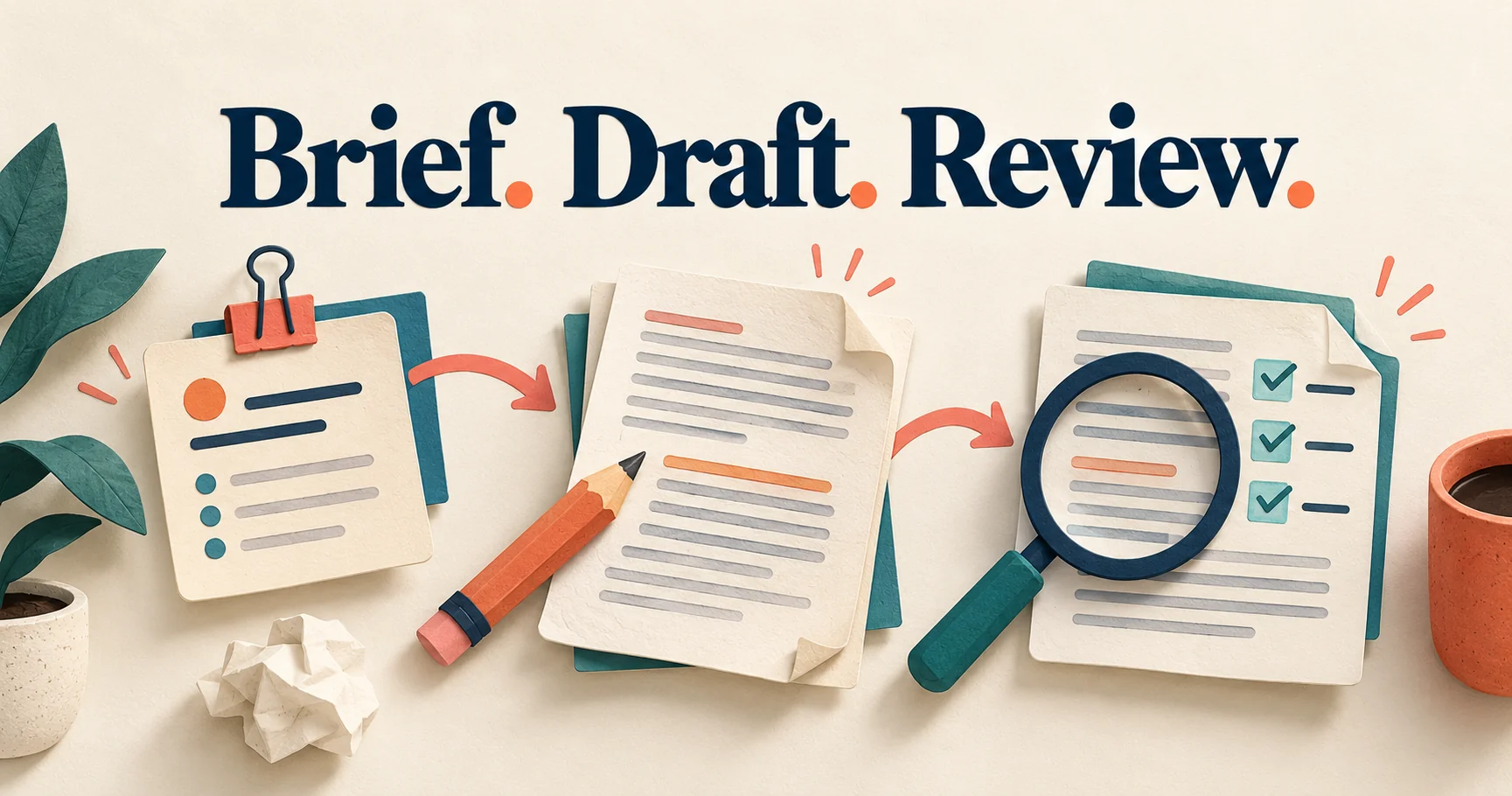
An AI writing tool is useful for client work only when the complete workflow meets the brief. Compare the same deliverable, including research, editing and handoff, before choosing a subscription.
Updated October 4, 2026: This page replaces an unsupported tested-and-ranked list. We do not have a documented comparative writing benchmark. Earlier scores, fixed prices, affiliate commission tables and unverified referral links have been removed.
Disclosure: Related reviews may contain disclosed affiliate links. This evaluation method does not require purchasing software.
Start with one representative brief
Specify the audience, purpose, format, length, tone and required sources. Write down what the client will accept and who must approve the result. Choose a sample that resembles your actual workload, rather than a prompt designed to produce an impressive demo.
Use public or permitted sample material. Before processing client information, verify the selected service’s current data terms and the client’s permission. Avoid assuming that a team subscription, local installation or familiar brand automatically resolves the data requirement.
Compare the complete workflow
| Stage | Evidence to record |
|---|---|
| Research | Sources that support factual claims; claims that remain unverified |
| Drafting | Instructions used and the version produced |
| Editing | Corrections for facts, structure, tone and repetition |
| Revisions | What changed after client feedback; time and usage consumed |
| Delivery | Required file format, editing access and final approval |
| Cost | Full billing commitment, usage limits and required seats |
Save the brief and output versions with the date. A comparison needs observable results from the same task. Vendor examples and an attractive interface can inform a shortlist but cannot establish your own quality or time saving.
Apply acceptance gates before scoring
Reject or revise a workflow when essential facts cannot be supported, confidential material cannot be processed appropriately, or the required deliverable cannot be handed over. A favorable writing score should not compensate for a failed requirement.
Check quoted material against its source. Review names, dates, numbers and links. Identify where the draft added claims that were absent from the brief. Do not publish a client endorsement, testimonial or personal testing claim unless there is evidence and permission to use it.
Measure editing and revision effort
Record active research, drafting, editing and handoff time separately. Label estimates clearly until you have observed a representative task. Keep the same quality standard when comparing the candidate with your existing process.
Repeat the sample with a plausible client revision. A fast first draft may need substantial correction later. Record the usable output and total effort instead of treating generated word count as completed work.
Inspect billing before subscribing
Compare the payment due now with the displayed monthly equivalent. Confirm renewal, cancellation, seats, included usage and any add-on needed for delivery. Keep unknown charges marked unknown.
Separate allocated project cost from cash paid. Test what happens if fewer projects share the subscription or the client requests another revision. An estimated saving is not received revenue.
Choose the next experiment
Keep your existing workflow as the baseline. Shortlist a candidate only when you can explain which requirement it may improve and how you will verify that improvement. Record the decision and unresolved questions; avoid declaring a universal winner from a single sample.
For research-heavy content, our keyword research workflow and keyword shortlist worksheet help keep search intent and evidence visible. For narration that accompanies client content, use the voiceover evaluation scorecard to assess a separate deliverable rather than assuming writing quality predicts audio quality.